
Which Joliet Sources Name Previous Residents?
Joliet address history spans two counties and several record eras. Most searches begin in Will County, but a property in the western Kendall County portion of the city must use Kendall County custodians. This chart shows why a blank result is a cue to change source, not proof that no one was present.
| Source | Years or cutoff | Where held | What it contributes |
|---|---|---|---|
| Will Recorder online records | Generally 1965 to current | DirectSearch; Tapestry or Laredo for images | Deed parties, dates, PIN and legal clues |
| Older recorder books and plats | Historical material from 1836; plats back to county inception | 158 N. Scott St. research room | Earlier title chain and lot continuity |
| Joliet city directories | JPL 1875 to present; JAHM through 2002 with gaps | JPL and JAHM | Occupants, spouse notes, work and address |
| Federal census | Released through 1950; 1890 missing | NARA and library databases | Households and relationships on one date |
| Sanborn maps | 1886, 1891, 1898, 1924 online; 1924 to 1956 at JPL | LOC and JPL | Footprint, use, material and number context |
| Newspapers and obituaries | JPL microfilm 1846 to present | JPL and JAHM | Moves, deaths, relatives and probate leads |
Ownership and occupancy must stay separate. A deed names parties to a transfer, while a directory records a publication snapshot. Agreement on the same parcel and year makes the evidence stronger.
Give a Joliet House One Stable Identity
Start with the Will County Supervisor of Assessments Property Search Portal. Save the current owner field, PIN, situs address, tax mailing address, subdivision, and legal description. The situs is the parcel location; the mailing line may lead to a different address, representative, trust, or post-office box. For a Kendall-side Joliet parcel, use Kendall County Assessment and GIS before choosing a recorder.
Keys that can outlast a street label
PIN: the parcel identifier. Legal description: its lot, block, unit, subdivision, or metes-and-bounds identity. Grantor and grantee: the transferring and receiving parties. Chain of title: the sequence of recorded transfers.
No verified citywide Joliet street-renumbering schedule was located. If an old number fails, compare nearby numbers, ward maps, Sanborn lots, and the legal description rather than silently equating two addresses.
Walk the Will County Deed Chain Backward
The deed chain supplies the ownership spine for previous residents research. Search the current PIN first, then the owner as a grantee. Read the newest deed and carry its seller backward. Keep checking the legal description, since a name match alone can attach the wrong person to the house.
- Confirm county, situs, PIN, and legal description.
- Search by PIN, owner, and address.
- Record the latest deed number, date, grantor, grantee, and legal description.
- Search that grantor as an earlier grantee, including spouse, trust, estate, and business variants.
- Repeat to the online limit, then move to books, microfilm, plats, or a copy request.
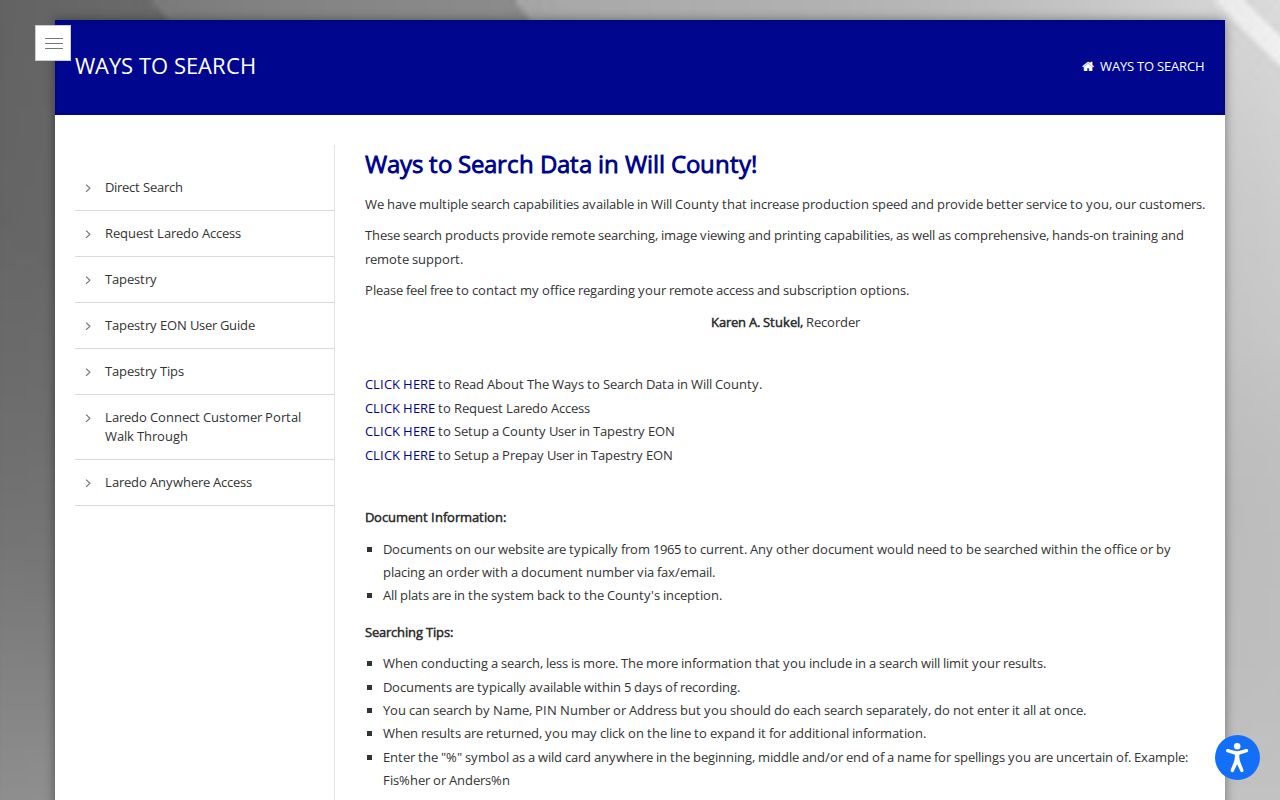
The Recorder explains these roles on its Ways to Search page.
A quitclaim, trustee, estate, or foreclosure deed may be a legal event without a household change. Treat it as title evidence until another dated source supports occupancy.
The 1965 Line in Joliet Previous-Resident Research
Will County states that online documents are generally available from 1965 forward. DirectSearch supplies free index data, Tapestry charges by search and document, and Laredo uses subscription access. Seeing an index row is not the same as obtaining a recorded image.
The Recorder fee page explains current image and copy charges.
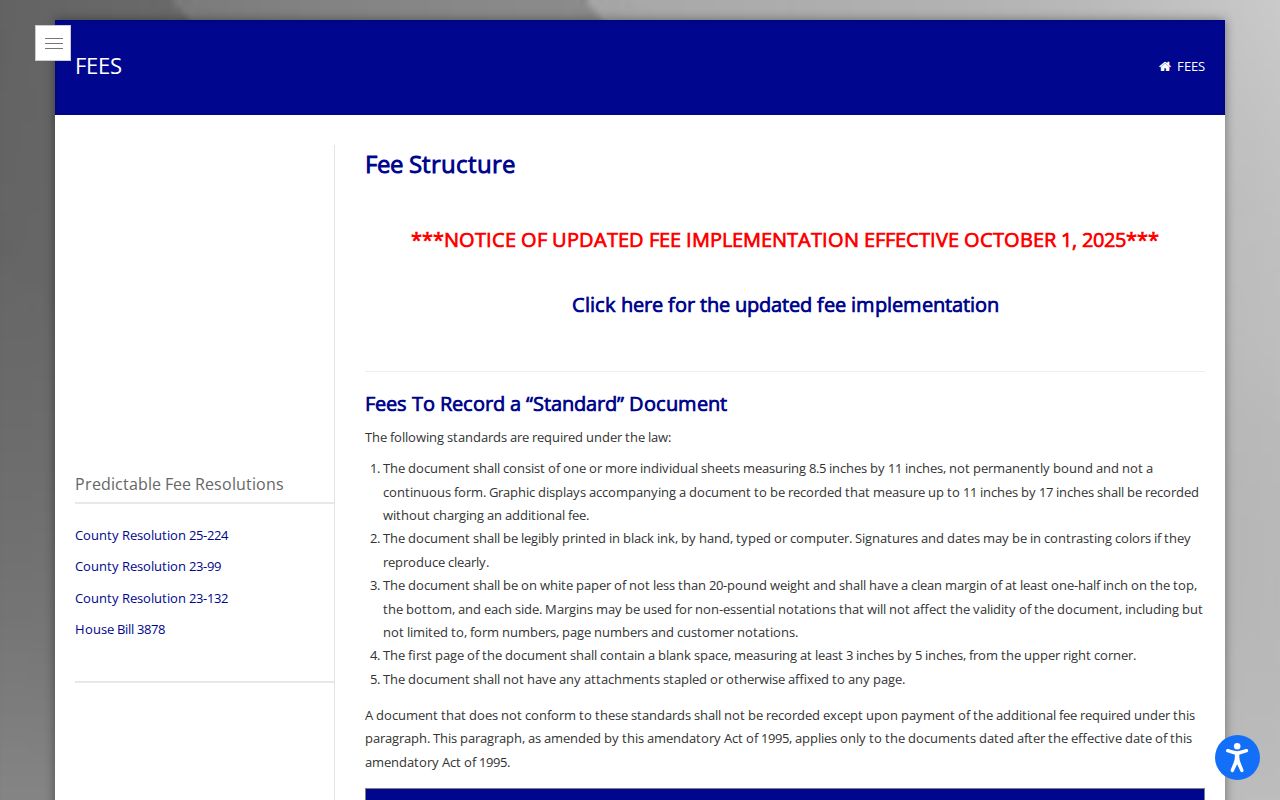
Check the live schedule before ordering. If the index supplies a document number and year, that exact reference is the best bridge to a copy.
Find Joliet Past Residents Before the Online Index
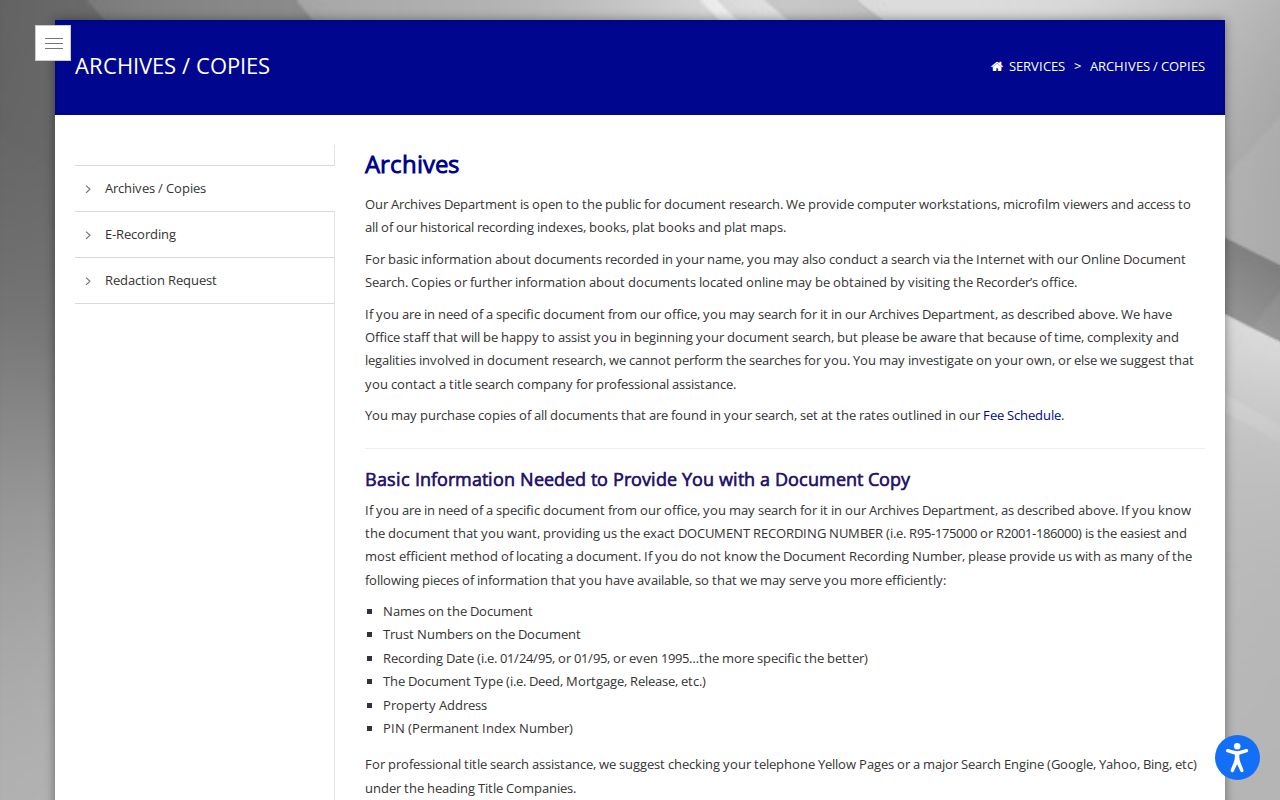
The Recorder research area has workstations, microfilm viewers, historical indexes, books, and plat books. Staff can orient a visitor but do not perform the whole search. Bring names, date range, document type, PIN, and legal description.
The Archives and Copies page describes the route.
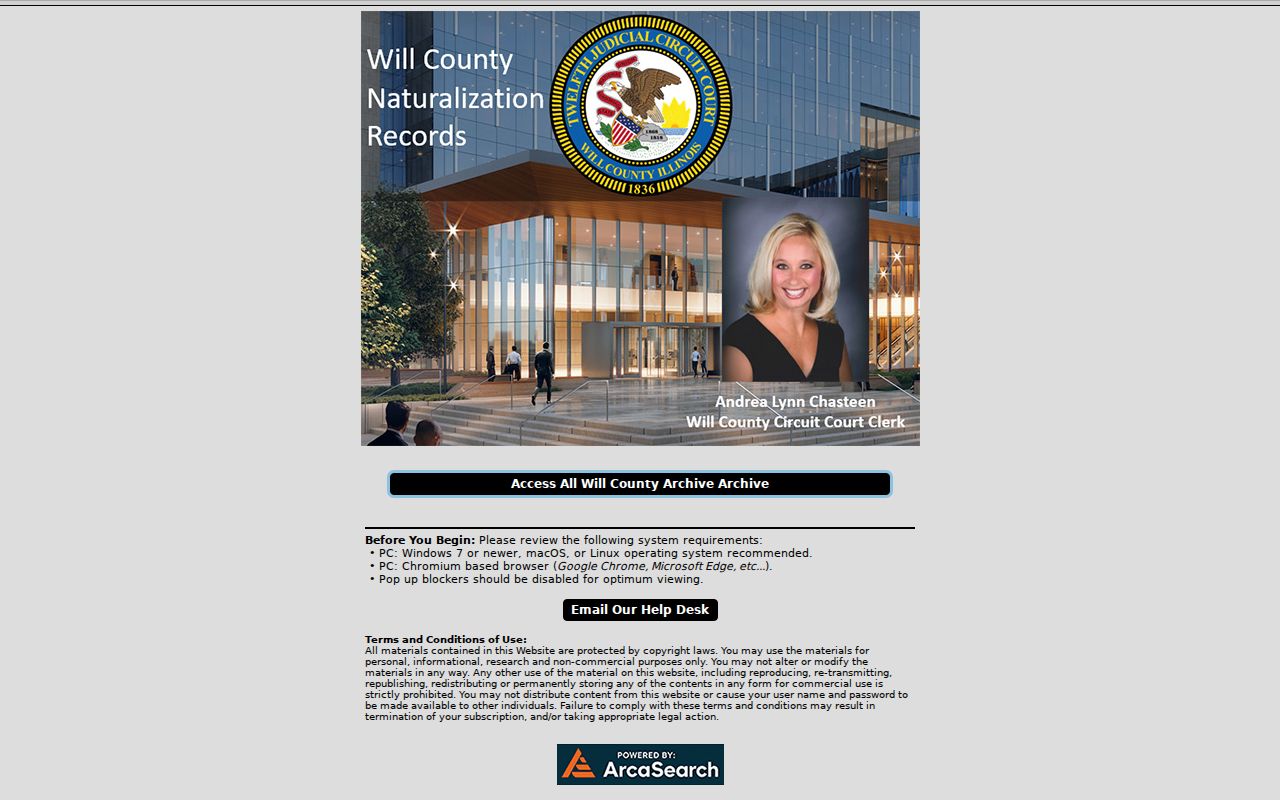
IRAD identifies the Northern Illinois University depository, while the Will Circuit Clerk archive includes naturalizations from 1854 through 1954.
The Will County historical archive search is a further documented access path.
Preserve the repository, collection, book or image reference, and search date with each result.
Pair Joliet Directory Years With Census Years
Past residents include boarders, spouses, children, and occupants a deed cannot name. Read the street section for the address, then the alphabetic entry for occupation, spouse, or widow notation. Compare it with the closest released census schedule.
- Choose one exact directory year and note the household and nearby numbers.
- Check surnames in the alphabetic pages.
- Compare the nearest released census year.
- Move one available directory at a time and note arrivals or departures.
- Test address changes against a deed, map, or newspaper notice.
The 1912 Polk street section appears on a digitized source page.
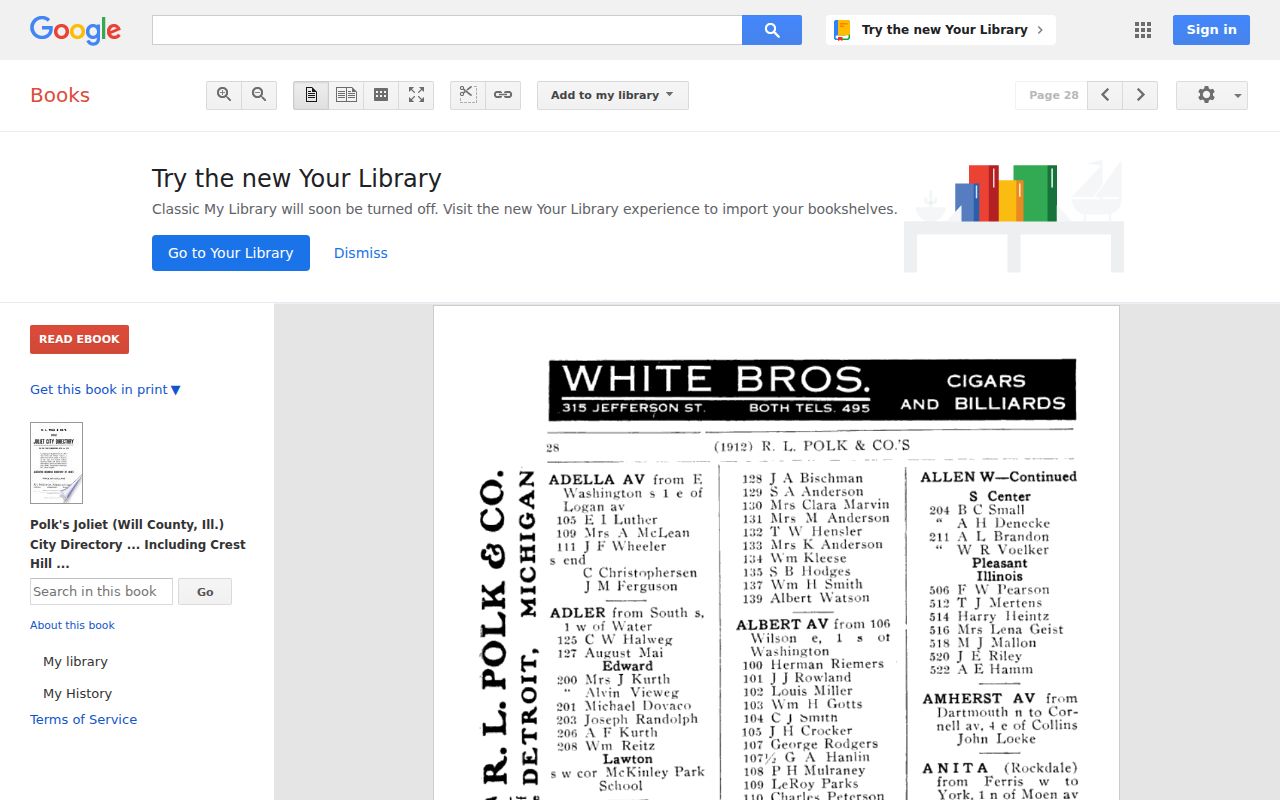
The volume uses h for home and bds for boarding, with occupation, firm, spouse, or widow details. More collection context appears on the Joliet city directories page.
Sanborn Maps Keep a Joliet Lot in View
Joliet sources include an 1862 map, an 1873 ward map and atlas, Sanborn sheets for 1886, 1891, 1898, and 1924, plus JPL Sanborn material through 1956. A sheet can show footprint, use, material, lot relationship, and number sequence, but it does not name every occupant.
Use the map between directory and deed work. The directory gives a numbered address, the map locates that number, and the recorder plat or legal description links it to the modern parcel. This is the safest response to a changed number.
Why Pre-1912 Joliet House Files Can Be Missing
Joliet tax and building records stored in Chicago before 1912 were destroyed in a fire. An exact early construction date may therefore not survive in a continuous city series.
Do not turn absence into a date. A missing early permit does not prove that a Joliet building or household did not exist.
Reconstruct the period with Sanborn maps, directories, newspapers, deeds, census schedules, and historic surveys. Agreement among several dated sources can narrow the era.
Close a Joliet Household Trail With Probate and Obituaries
A directory may establish the last year a person appeared. A notice can add a death, move, spouse, child, funeral home, or former residence. Probate may identify an executor and heirs. JPL staff require a month and year for newspaper searches, so bring the tightest date the earlier work provides.
JPL holds newspaper microfilm from 1846 to present and obituary indexes for 1915 to 1918 and 1976 to 2012. JAHM adds newspaper runs with gaps. Public probate clues lead to the Will Circuit Clerk for the file, subject to restrictions.
Lawful personal use. Research who lived here before for house history, genealogy, and estate questions. Never use a trail to monitor, harass, or harm a living person.
Build a Joliet Previous Residents Evidence Log
A final timeline should preserve more than names. For every item, note the source title, custodian, search date, record year, address as printed, parcel or legal-description key, and the exact role of each named person. Mark an owner as an owner, a directory householder as a listed householder, and a census member as part of the household recorded on that census date. This discipline prevents a title party from being mislabeled as an occupant.
Conflicts are normal in a long Joliet trail. A directory could have gone to press before a move, a tax mailing address may point elsewhere, and a deed may be indexed days after recording. OCR can distort names in a digitized volume, so compare the page image. Search DirectSearch with name variants and its percent wildcard, then narrow the result by PIN, city, date, or document type. When two sources disagree, keep both dates and look for the next independent record instead of choosing the more convenient answer.
The strongest conclusion about previous residents states its limit. A directory and census may support occupancy during a period; a deed and assessment card may support ownership; an obituary or probate file may explain why the household trail ends. None supplies a permanent roster. Recording those distinctions makes the history useful to a later family researcher and fair to every living person whose name may appear.