
What Can Show the Joliet Neighbors on a Block?
Public block research is source-specific. GIS defines which parcels are adjacent, the assessor identifies recorded ownership fields, and the recorder supplies title documents. Community directories identify associations, not their private members. Use this chart to keep each result within its real limits.
| Source | What it shows around an address | Access and boundary |
|---|---|---|
| Will GIS Data Viewer | Parcel outlines, address points, street segment, buffer, and map layers | Free viewer; map line is not a legal survey |
| Will Supervisor of Assessments | Owner, PIN, mailing and situs fields, class, sale, and legal description | Free address, PIN, or owner search; not an occupant roll |
| Will Recorder | Deed parties and recorded instruments for each parcel | Free index, paid images, older records at office |
| Illinois voter lookup | Status check for a person who supplies matching details | No casual street or block roster |
| City neighborhood directory | Public association contacts and civic geography | Contact list, not a membership directory |
| JPL and JAHM directories | Past occupants listed by street and house number | Historical snapshots with year gaps |
An assessor owner and a person living at the situs may be different. A tax mailing address can also belong to a representative, trust, business, or second property. Phrase every conclusion to match the record.
Map the Subject Parcel Before Naming Joliet Neighbors
Joliet crosses the Will and Kendall county line, so first confirm which county contains the legal parcel. For most city addresses, open the Will GIS Data Viewer, search the address, and use Identify on the subject parcel. Turn on parcel outlines, address points, and street labels before deciding what counts as the block.
Define the map before reading it
Adjacent parcel: a parcel sharing a boundary or a clearly defined frontage relationship. Buffer: a measured area around a selected feature. Situs address: the location address of a parcel, which can differ from the owner's mailing address.
The western Kendall portion requires Kendall GIS and assessment records. A Joliet postal label alone does not settle the custodian, and a GIS boundary is a research guide rather than a survey.
Use Will GIS Tools to Define “Nearby” in Joliet
The Will viewer includes Identify, Buffer, Measure Area or Distance, labels, print and export controls. If neighbors means only parcels that touch, record those parcels. If it means a radius, select a point or feature, state the distance used, and save the dated output. This prevents an arbitrary list from expanding without a clear rule.
The county’s Data Viewer instructions explain Identify, Buffer, and Measure.
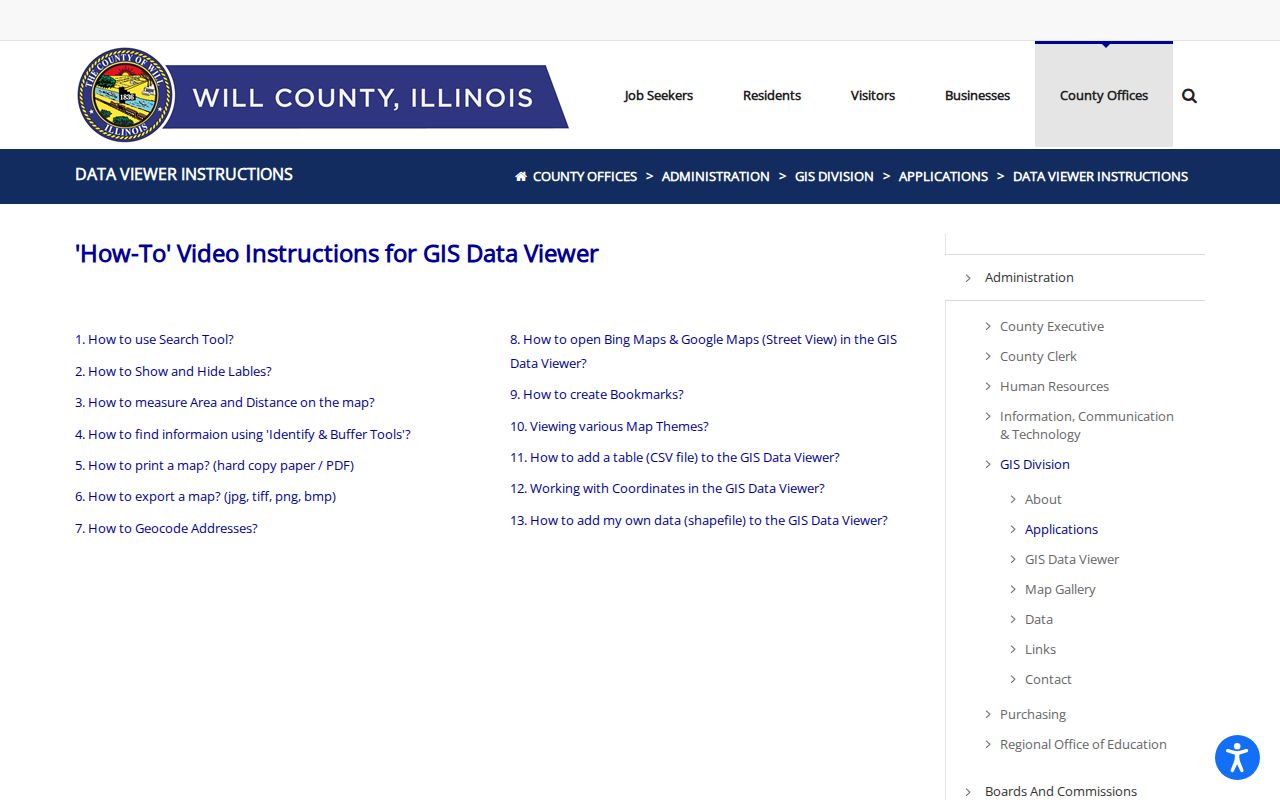
Weekly address-point and street layers can be combined with parcels, zoning, flood or hydrology, schools, taxing districts, trails, railroads, and forest preserves. Save the layer set and date so someone else can reproduce the same block view.
Move From a Joliet Address to Surrounding Parcel Owners
Once the shape is fixed, follow the same short process for each parcel. Do not copy every visible name into a public list. Record only what is needed for a personal property or civic question, and preserve the source date.
- Locate the subject address and identify its parcel.
- Mark parcels sharing a boundary, directly across the street, or inside the stated buffer.
- Capture each nearby PIN or address attribute.
- Open the Will assessment portal and compare owner, mailing, situs, property class, sale, and legal description.
- Use the recorder only when a deed, plat, or other recorded instrument answers the question.
Owner identity is evidence about a parcel, not a complete answer about your neighbors. A mailing address matching the situs can support an owner-occupancy inference, but it remains an inference. For research covering a full named road, use the Joliet by-street guide.
Recorded Documents Add a Joliet Block’s Title Layer
Will Recorder DirectSearch accepts last or business name, first name, dates, document type, address, city, ZIP, and PIN. It can connect a nearby parcel to deeds, plats, mortgages, liens, or other recorded instruments. Online documents generally reach 1965 to current; older books and indexes remain at 158 N. Scott St.
Recorded material can also expose sensitive number fields that do not belong in block research. The Recorder redaction page identifies its targeted correction route.
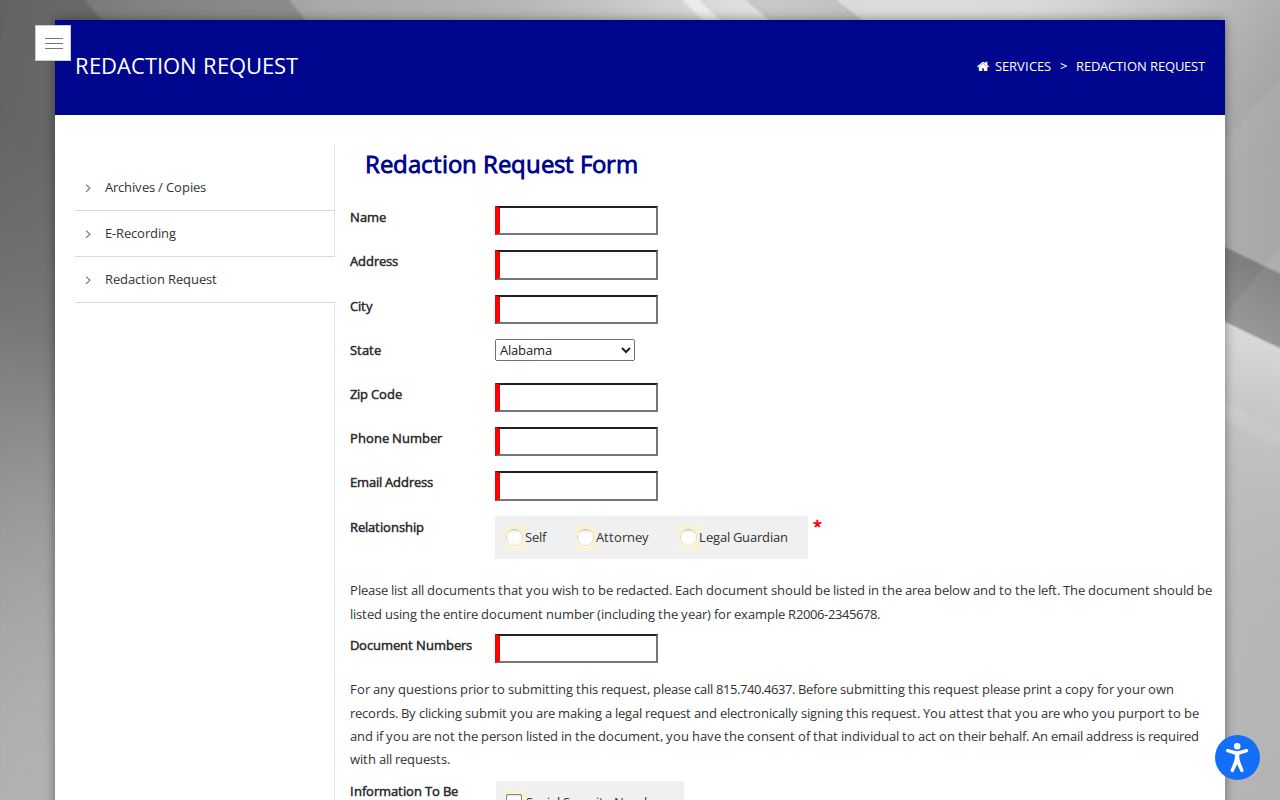
A redaction request can target specified personal numbers in a known document. It does not erase a deed, remove the title chain, or make an entire parcel disappear.
Joliet Neighborhood Associations Supply Civic Contacts
The City publishes public contact routes for numerous neighborhood and subdivision groups. These contacts can help with a meeting notice, boundary question, block event, or neighborhood-history lead. The page depends on updates supplied to the City and must not be treated as a list of households.
| Public group | Community clue | Correct use |
|---|---|---|
| Cathedral Area Preservation Association | Connects the Cathedral Area with the older St. John's civic label | Preservation and public neighborhood contact |
| Eastside Neighborhood | East Side civic geography | Public contact and local issue route |
| Collins Street Neighborhood Council | Named corridor council | Meeting or public boundary inquiry |
| Reedwood Neighbors Together | Named neighborhood organization | Community contact, not household confirmation |
| Riverside | Named association in the City directory | Public civic contact |
| Bicentennial Bluffs | Formerly tied to the St. John's Neighborhood Association name | Modern and historical label check |
Use the City’s neighborhood-association page for the current contact list. Ask an association to route a public question, not to disclose its private roster.
Joliet Organization Listings Are Not Resident Rosters
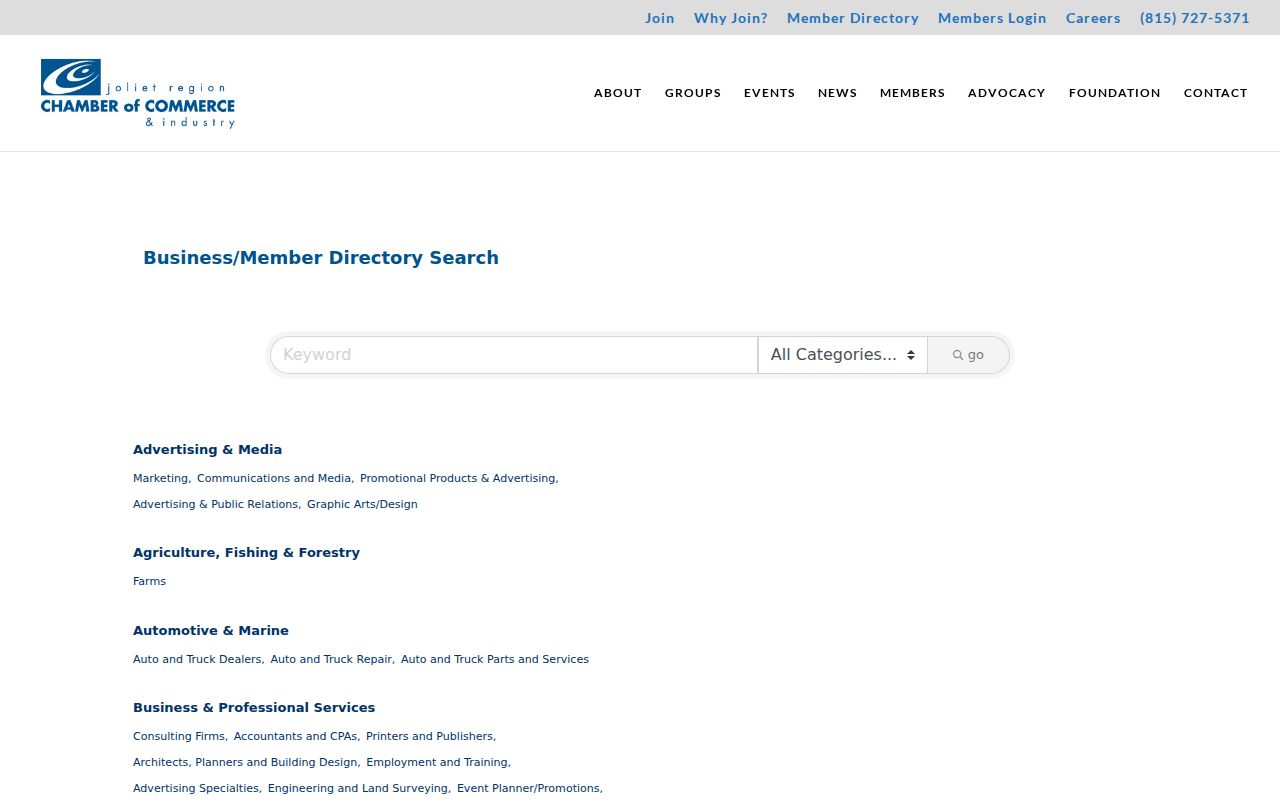
Community, civic, education, health, government, and religious organizations appear in the Joliet Chamber directory. This is useful for finding a public institution or community contact connected with a block. It does not establish that an individual lives nearby, belongs to a group, or attends a congregation.
The Joliet Chamber public directory shows the organization-search layer used here.
No official open congregation-member, fraternal, or block-watch roster was located. Contact the organization about public programs and archive material without assuming private membership information is available.
Why Illinois Voter Data Is Not a Joliet Block Directory
The state voter-status form requires first name, last name, birth date, five-digit ZIP, street number, and a dynamic street choice. It checks one supplied identity. It is not a browseable list of people around an address.
Illinois law limits computerized voter information and restricts copying, transmission, commercial use, and harassment. Full files are for authorized political purposes under stated rules, while public counts do not identify individuals. Protected addresses may also be withheld or substituted. Use the form only to verify details a person has lawfully supplied.
Official Joliet Rolls Versus Commercial Neighbor Tools
Commercial tools may merge marketing files, old addresses, and public records into a quick result. Their speed can hide stale mailing lines, combined households, and uncertain sources. Official records take more steps, but each claim can be tied to a custodian and date.
| Question | Official-source route | Commercial compilation risk |
|---|---|---|
| Which parcels touch? | GIS outlines, Identify, and Measure | Undefined radius or stale map |
| Who owns a parcel? | Assessment field plus recorder deed | Old owner or tax mailing name |
| Who lives there? | No universal public household roll | Households can be merged or outdated |
| Which civic group serves the area? | City association contact directory | Unclear source and update date |
The official chain does not guarantee a full household answer. Its value is transparency about what is known, when it was recorded, and what remains private.
A Will County Alert Protects Your Own Joliet Parcel
Neighborhood curiosity can lead to a practical safety step for one's own property. Will County offers a free Property Fraud Alert that sends notice when a subscribed name appears on a recorded document. It is an alert, not title insurance and not a block-monitoring service.
The Recorder’s Property Fraud Alert page provides the official signup route.
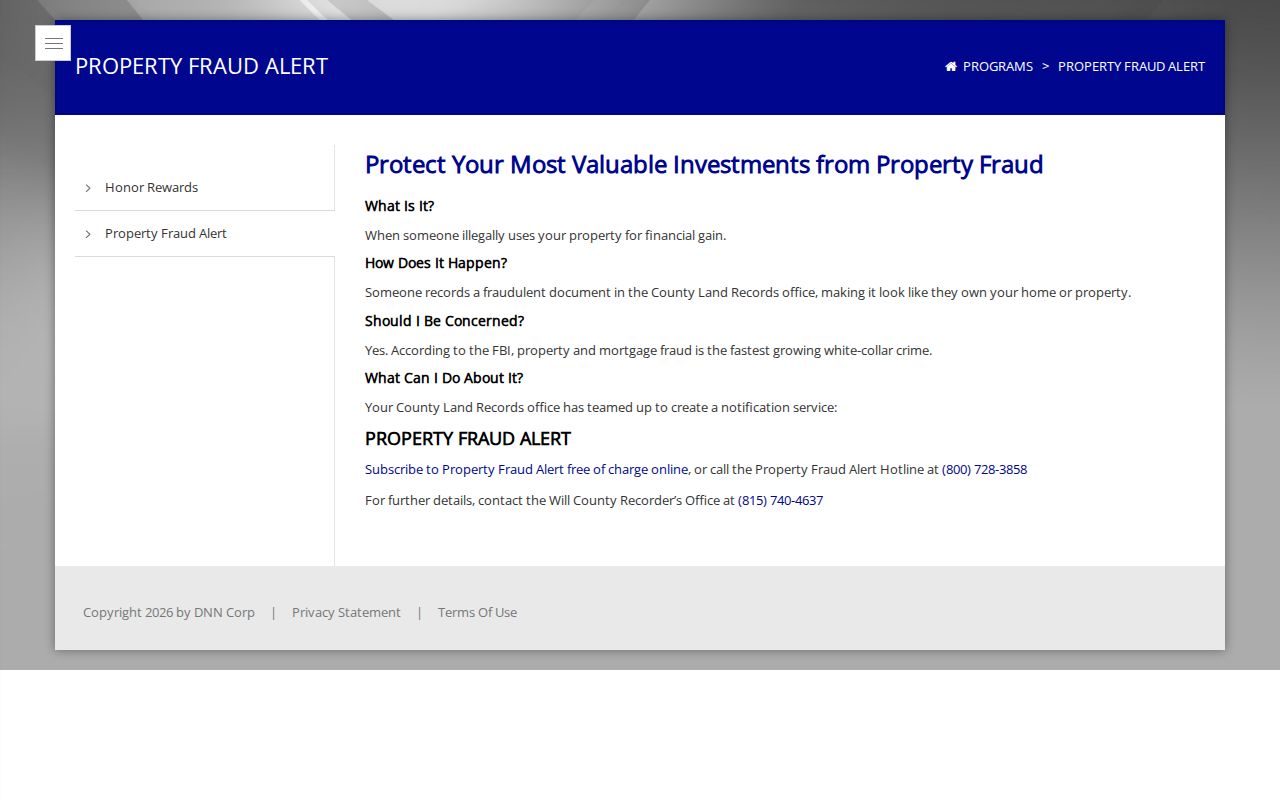
If an alert seems wrong, preserve the document number and recording date, then contact the Recorder at 815-740-4637. Do not confront another person based on an automated notice.
Respect Privacy When Looking Up Joliet Neighbors
Parcel ownership is public, but private household members, visitors, utility customers, delivery records, protected voters, and many occupants are not. Illinois Address Confidentiality Program participants may use a substitute address, and public-record exemptions can protect private information. Existing public deeds are not erased by that program.
Lawful use. Learn about your Joliet block for civic contact, property context, or personal safety. Never use these sources to watch, pressure, harass, or harm anyone.
Correct an inaccurate source record through its custodian. An outside compilation cannot amend the assessor, recorder, voter authority, or court file from which the claim arose.